











Dual Motor vs Single Motor Electric Racing Karts
Electric propulsion has transformed modern competitive karting and commercial fleet operations through instantaneous torque delivery, modular electronic control units, and zero local emissions. Choosing between a single-motor configuration and a dual-motor all-wheel or independent rear-drive architecture dictates power delivery, cornering agility, maintenance overhead, and total cost of ownership. Leading commercial fleet operators and leisure track proprietors collaborate closely with top-tier electric kart manufacturers to determine whether a streamlined single-drive axle or an advanced dual-motor setup best aligns with their facility track profile, driver skill targets, and commercial turnover goals.
Powertrain Architecture and Drivetrain Mechanics
Single-Motor Drivetrain Configurations
The single-motor architecture represents the bedrock of commercial Electric Go Karts. In this traditional configuration, a central brushless direct-current (BLDC) or permanent-magnet synchronous motor (PMSM) delivers mechanical power through a primary belt drive, chain system, or direct reduction gearbox linked directly to a rigid live rear axle. According to foundational automotive engineering standards published by SAE International, simplified single-point propulsion mechanisms significantly minimize rotating mass and mechanical complexity. Because both rear drive wheels are mechanically locked to the same solid shaft, the system enforces equal rotational velocity across both tires. This simplicity provides predictable straight-line acceleration and uniform mechanical stress distribution across the chassis tubing, making it an exceptionally reliable foundation for high-throughput commercial rental facilities.
Dual-Motor Torque Vectoring and Dynamic Control
Dual-motor racing setups elevate vehicle dynamics by deploying dedicated motors either on each rear wheel or across an all-wheel-drive (AWD) layout. By decoupling wheel speeds electronically rather than relying on mechanical differentials, track management software can integrate algorithmic torque vectoring. Dynamic control architectures governed by IEEE standard industrial automation protocols enable instantaneous microsecond power adjustments to the inside and outside wheels during corner entry and mid-apex acceleration. The outer motor spins faster with increased torque to combat turn-in understeer, while the inner motor can apply regenerative braking resistance. This setup maximizes lateral grip, optimizes lap consistency, and replicates the handling dynamics of open-wheel formula cars, though it introduces greater telemetry overhead and sophisticated motor controller tuning requirements.
Thermal Dissipation and Power Draw Dynamics
Operating high-output karts continuously in indoor and outdoor circuits places extreme thermal demands on the battery pack, inverter modules, and motor stators. In single-motor karts, one power unit absorbs the full mechanical load of frequent deceleration and aggressive acceleration. This concentrated thermal profile requires robust passive or active heat-sink enclosures to prevent thermal throttling. Conversely, dual-motor systems distribute the total wattage demand across two distinct stators. Running two smaller motors at moderate duty cycles often yields superior thermal headroom under sustained peak loads. However, the dual-inverter draw can accelerate cell voltage sag if the kart battery pack does not feature high continuous discharge ratings, necessitating strict adherence to thermal safety guidelines similar to those outlined by the International Organization for Standardization (ISO) for light electric vehicles.
Operational Efficiency and Commercial Fleet Viability
Maintenance Cycles and Mechanical Longevity
From a maintenance perspective, commercial entertainment tracks must balance driver excitement with operational downtime. Single-motor karts feature fewer moving parts, fewer wire harnesses, and single-channel controllers, allowing track mechanics to perform routine inspections, drive-chain tensioning, and bearing lubrication rapidly. Dual-motor machines, while technologically superior on technical sprint circuits, introduce dual planetary gearboxes or twin hub drives, dual encoders, and complex wiring channels. If one controller experiences signal drift or an encoder encounters hall-sensor degradation, mechanical troubleshooting becomes significantly more complex. For standard multi-driver commercial fleets, drivetrain simplicity translates directly into predictable fleet readiness and lower labor costs per operational hour.
Energy Consumption and Battery Management
Battery chemistry and power delivery profiles dictate how many sessions a commercial kart can complete before returning to the charging dock. Dual-motor configurations frequently demand larger capacity lithium iron phosphate (LiFePO4) or nickel manganese cobalt (NMC) battery banks to satisfy the sudden peak ampere draws demanded by dual controllers under hard acceleration. In contrast, well-calibrated single-motor commercial drift cars and leisure karts maximize operating time per kilowatt-hour by smoothing out throttle transients. When amusement parks, family entertainment centers (FECs), and experiential leisure centers seek durable, high-turnover attractions, they prioritize mechanical resilience and battery versatility over complex multi-motor telemetry.
Specialized Commercial Alternatives for Family Entertainment Centers
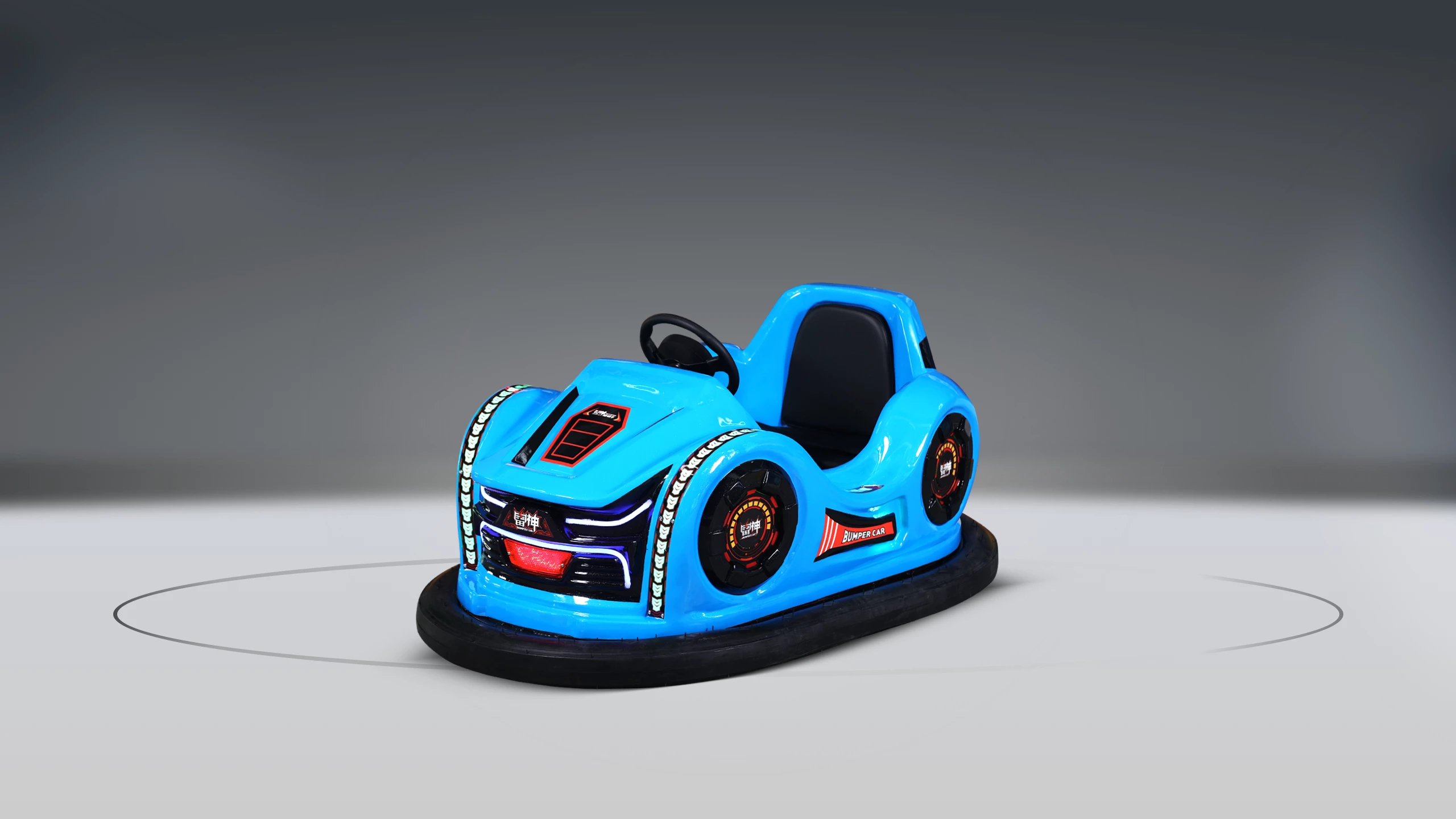
While multi-thousand-watt dual-motor racing machines dominate professional sanctioning bodies like the Fédération Internationale de l'Automobile (FIA), modern family leisure centers require innovative, high-thrill attractions designed for safety, modularity, and rapid fleet turnaround. The Battery Drift Bumper Car With inflatable tyre serves as a prime engineering solution for family amusement facilities seeking exhilarating drifting mechanics without the high operating costs of twin-inverter racing karts. The Battery Drift Bumper Car with Inflatable Tire with 650W steel gear motor, and high quality battery wich can becharged outside the car, the bumper car is ideal for amusement parks, family entertainment centers, build quality for safe, long-lasting fun. By utilizing an industrial-grade 650W steel gear motor coupled to external swappable battery systems and pneumatic protective rings, this configuration delivers superior impact dissipation, instant drift capabilities, and non-stop operational turnover.
Comparative Engineering and Performance Analysis
To help venue planners, track owners, and commercial fleet buyers evaluate powertrain architectures alongside commercial drift models, the following technical comparison contrasts the core characteristics of single-motor karts, dual-motor sprint karts, and heavy-duty commercial drift bumper units.
| Comparison Factor | Option A | Option B |
|---|---|---|
| Drivetrain Configuration | Single BLDC / PMSM Motor with Solid Rear Axle | Independent Dual-Motor Electronic Torque Vectoring |
| Acceleration & Peak Torque | Smooth, linear power output with low slip variation | Instantaneous differential torque with maximum lateral grip |
| Handling & Cornering Dynamics | Classic live-axle slip angle; requires intentional trail-braking | Algorithmic yaw assistance; sharp turn-in, reduced understeer |
| Maintenance Complexity | Minimal wiring; single inverter; rapid mechanical servicing | Dual inverters, synchronized sensors, complex electronic diagnostic needs |
| Battery Efficiency & Run Time | High efficiency per charge cycle; stable thermal discharge | Higher peak current draw; requires high C-rate power packs |
| Target Venue Application | Rental go-kart circuits, training academies, recreational tracks | Professional karting leagues, advanced competition circuits |
| Commercial Alternative Profile | Modular 650W Steel Gear Drive with Swappable Battery | High-wattage dual-stator dynamic competition platform |
Fleet Procurement Strategies for Commercial Track Operators
Analyzing Venue Track Layout and Surface Friction
When selecting kart powertrains from professional electric kart manufacturers, venue operators must first audit their track geometry, surface coating, and intended target demographic. Tight, indoor technical tracks packed with hairpin turns benefit significantly from dynamic agility; however, installing dual-motor racing karts for inexperienced public drivers often leads to aggressive barrier collisions, accelerated tire degradation, and increased chassis wear. A single-motor configuration with a durable steel transmission or a purpose-built drift chassis with an inflatable perimeter provides the optimal threshold between excitement and passenger containment. Concrete surfaces treated with slick epoxy sealants reward agile single-motor torque platforms that let drivers drift safely at lower, manageable speeds.
Assessing Charging Infrastructure and Turnaround Times
Every minute a kart sits idle at a charge station represents lost revenue for entertainment venue operators. High-voltage dual-motor karts typically require heavy internal battery assemblies that mandate fixed tethered DC fast charging, occupying valuable trackside staging areas. Conversely, platforms equipped with external charging capabilities transform commercial profitability. The ability to pull depleted lithium power packs and insert freshly conditioned batteries within sixty seconds completely eliminates fleet downtime. This swappable methodology shields sensitive electronics from charging heat spikes, doubles overall fleet availability during peak weekend attendance, and drastically lowers upfront infrastructure costs for electrical transformer upgrades.
Total Cost of Ownership and ROI Considerations
A comprehensive procurement evaluation considers the initial capital expenditure, spare parts availability, motor durability, and recurring component wear. Dual-motor setups carry higher retail prices, increased warranty risk, and higher spare parts holding costs for dedicated controllers and sensors. Single-motor commercial platforms with heavy-duty steel reduction gearing minimize premature gear stripping and drive-belt snapping under severe shock loads. By partnering with established electric kart manufacturers capable of engineering custom gear configurations, impact-resistant inflatable bumpers, and swappable power systems, entertainment facilities ensure high customer satisfaction ratings, minimal maintenance downtime, and an expedited return on capital investment.
For bespoke commercial fleet solutions, custom entertainment track designs, or detailed engineering specifications on high-durability electric drift platforms, explore our complete vehicle lineup or reach out directly to our commercial engineering team at sandy@anchiyoule.com.
Frequently Asked Questions
What is the main handling difference between dual-motor and single-motor electric karts?
Single-motor electric karts utilize a unified rear axle where both wheels rotate at equal speeds, requiring precise braking and weight transfer to rotate through tight turns. Dual-motor karts feature independent motor control on each wheel, allowing dynamic torque vectoring that powers the outside wheel faster to sharply pull the vehicle through corners with minimal understeer.
Why do commercial family entertainment centers prefer single-motor drift cars over dual-motor racing karts?
Commercial entertainment centers prioritize passenger safety, operational uptime, and low maintenance. Single-motor platforms, like drift cars featuring a 650W steel gear motor and inflatable bumper tires, deliver thrilling controlled slips without extreme high-speed collision hazards or the intricate sensor calibrations associated with dual-motor systems.
How does battery charging outside the vehicle improve commercial fleet operations?
External swappable batteries eliminate kart downtime during peak business hours. Instead of leaving karts plugged into charging stations for hours, operators can swap an empty battery for a fully charged unit in under a minute, keeping the attraction running continuously and maximizing track revenue.
Do dual-motor electric karts consume significantly more battery power?
Yes. Dual-motor configurations draw higher continuous and peak amperage to power two independent stators and inverters. This increased power draw requires larger battery capacities and high C-rate discharge cells, which can lead to higher battery operating temperatures and faster overall depletion per driving session.

The Cyclone RS 2025 is a high-performance electric ride-on car designed for thrill-seekers, entertainment centers, and commercial amusement businesses. Built with a durable ABS body and reinforced metal chassis, it combines strength, safety, and speed for a superior driving experience. With a 1200W mid-mounted motor (peaking at 3600W), advanced control system, and long-lasting 72V20AH LiFePO₄ battery, this ride ensures both powerful performance and reliability.
Whether for amusement parks, game zones, rental businesses, or personal recreational use, the Cyclone RS 2025 delivers unmatched excitement and durability.

Discover adventure with the ANCHI Kids Electric One-seater ATV, the perfect electric off-road experience for young explorers. Designed for safety and performance, this electric off-road go kart for kids offers unmatched thrills on any terrain. Its durable build and easy-to-use controls ensure a fun and safe ride. Ideal for budding adventurers, this ATV promises endless excitement. Explore the world with confidence with ANCHI’s innovative electric off-road solutions for kids.

The Battery Drift Bumper Car with Inflatable Tire with 650W steel gear motor, and high quality battery wich can becharged outside the car, the bumper car is ideal for amusement parks, family entertainment centers, build quality for safe, long-lasting fun.

Discover the future of fun with the ANCHI Spaceship Laser Battle Bumper Car! Designed for thrill-seekers, this kids bumper car offers an exhilarating laser battle experience. Parents and children alike will enjoy hours of safe, exciting play. Ideal for parties or everyday fun, it combines durability with innovative technology.


